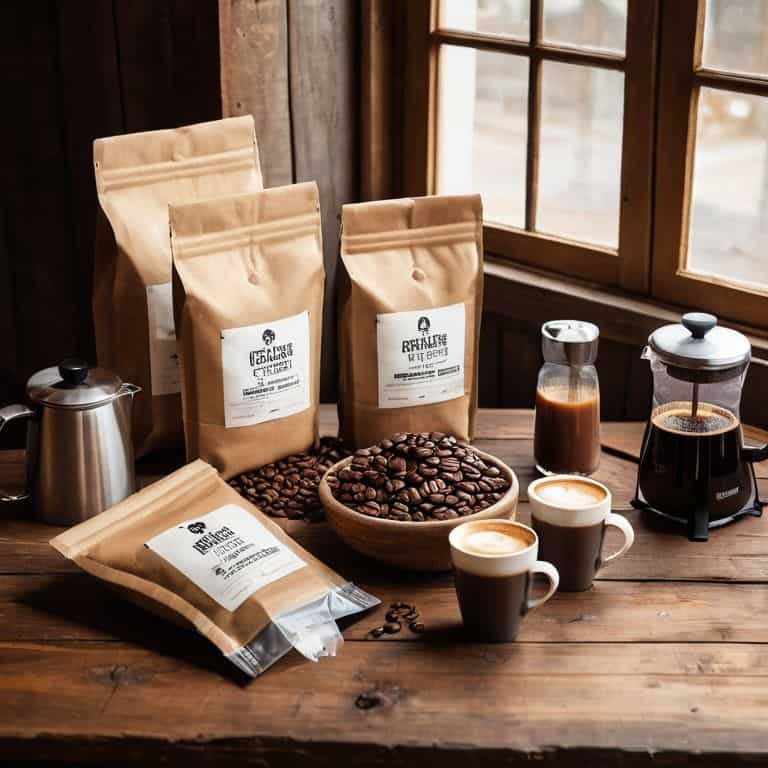
I still remember the day I stumbled upon a small, hidden cafe in the mountains of Colombia, where the owner, a passionate farmer, brewed coffee using a traditional French press. It was a moment that changed my perspective on a guide to coffee brewing methods. For years, I’ve been on a quest to understand the nuances of coffee brewing, and I’ve come to realize that there’s no one-size-fits-all approach. The common myth that there’s only one “right” way to brew coffee is not only frustrating but also misleading.
As someone who’s spent years developing custom roast profiles and sourcing high-quality beans, I’m excited to share my expertise with you. In this article, I’ll provide you with honest, no-hype advice on how to navigate the world of coffee brewing methods. You’ll learn about the different techniques, from pour-overs to siphon brewing, and how to choose the best method for your favorite coffee beans. My goal is to empower you with the knowledge to experiment and find your perfect cup, without the confusion and overwhelm that often comes with a guide to coffee brewing methods.
Table of Contents
Guide Overview: What You'll Need
Total Time: 30 minutes to 1 hour
Estimated Cost: $20 – $100
Difficulty Level: Easy
Tools Required
- Coffee Grinder (optional)
- Kettle (stovetop or electric)
- Coffee Brewer (varies by method)
Supplies & Materials
- Coffee Beans (varies by type and quantity)
- Filter Paper (for drip brewing)
- French Press (for immersion brewing)
- Pour-over Cone (for manual brewing)
Step-by-Step Instructions
- 1. First, select your coffee beans based on the brewing method you wish to use. Different methods bring out different flavors, so choose a bean that complements your desired brew. For instance, a lighter roast might be ideal for a pour-over to preserve the coffee’s nuanced acidity.
- 2. Next, measure your coffee with precision, as the ratio of coffee to water is crucial for optimal flavor. A general rule of thumb is to use 1 tablespoon of coffee for every 6 ounces of water, but feel free to experiment to find your perfect balance.
- 3. Now, grind your coffee beans to the appropriate coarseness for your brewing method. A burr grinder is preferable to a blade grinder, as it produces a more consistent grind and doesn’t generate heat, which can damage the beans.
- 4. Prepare your brewing device. If you’re using a French press, make sure it’s clean and free of any residual coffee oils, which can affect the flavor of your new brew. For other methods, like drip brewing or pour-over, ensure the filters are in place and rinsed with hot water to remove any paper taste.
- 5. Heat your water to the ideal temperature, which is between 195°F and 205°F for most brewing methods. Be careful not to go above 205°F, as this can burn the coffee and result in a bitter taste.
- 6. Initiate the brewing process. For a pour-over, slowly pour the heated water over the grounds in a circular motion, making sure to saturate all the grounds evenly. For a French press, pour the water over the coffee grounds and let it steep for about 4 minutes, depending on your desired strength.
- 7. Finally, serve and enjoy your carefully crafted coffee. Pay attention to the aroma, acidity, and body of the coffee. Notice how the flavors evolve as the coffee cools. This is a great time to appreciate the story behind the coffee, from the farm it was grown on to the method it was processed with.
A Guide to Coffee Brewing Methods
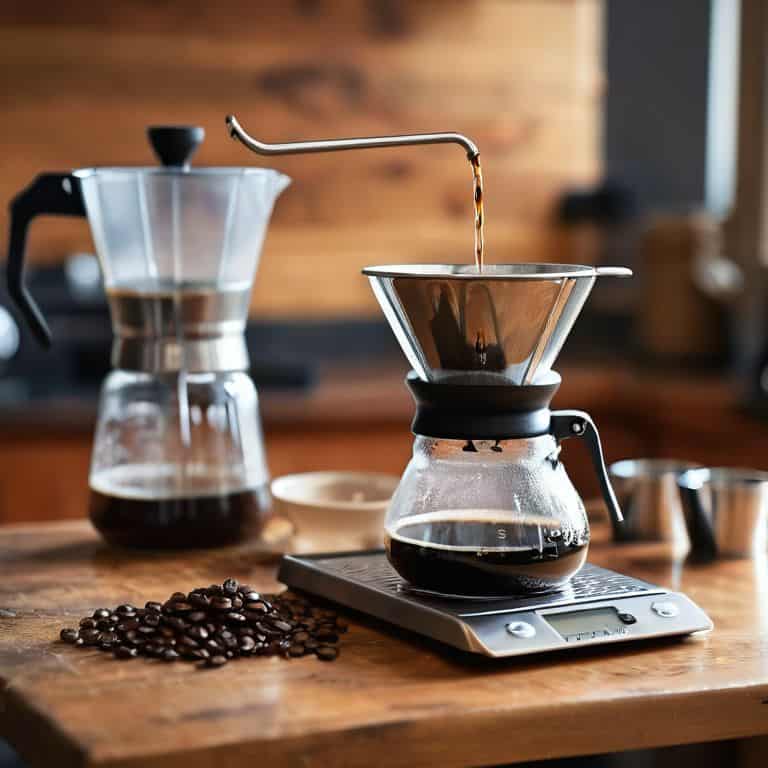
As I delve into the world of coffee brewing, I’m reminded of the importance of coffee to water ratio. It’s a delicate balance that can make or break the flavor of your cup. I’ve found that a ratio of 1:15 to 1:17 is ideal, but it ultimately depends on your personal taste preferences. When experimenting with different ratios, be sure to adjust your grind size for brewing accordingly, as a finer grind can lead to over-extraction.
To take your brewing to the next level, consider investing in a thermometer for brewing temperature control. The ideal temperature for brewing coffee is between 195°F and 205°F, and even a slight deviation can affect the flavor. I’ve also noticed that coffee equipment maintenance is often overlooked, but it’s crucial for preventing any buildup of old coffee oils and residue.
When selecting a coffee, don’t be afraid to explore different coffee flavor profiles. From the bright acidity of Ethiopian Yirgacheffe to the rich, smooth flavor of Brazilian Santos, each coffee has its own unique character. By understanding the nuances of coffee bean roast levels, you can better appreciate the craftsmanship that goes into creating your favorite brew. Whether you’re a seasoned coffee connoisseur or just starting out, I encourage you to embark on a journey of discovery and find the perfect cup that tells a story of its origin.
Brewing With Perfect Grind Size
To truly master the art of brewing, you need to understand the nuances of grind size. I’ve spent years experimenting with different roasts and grind settings, and I can confidently say that the perfect grind size is the key to unlocking a coffee’s full potential. For a French press, you’ll want a coarse grind, while a pour-over requires a finer, more even grind.
I like to think of grind size as the bridge between the coffee’s origin story and the final cup. Get it right, and you’ll be rewarded with a rich, full-bodied flavor that transports you to the coffee’s birthplace. Get it wrong, and you’ll end up with a lackluster brew that fails to impress. Trust me, I’ve been there – and that’s why I’m passionate about sharing my knowledge to help you brew like a pro.
Coffee to Water Ratio Magic
When it comes to brewing the perfect cup, the coffee to water ratio is where the magic happens. I’m obsessed with finding that sweet spot, and I’ve spent years experimenting to get it just right. For me, it’s all about balance – too much coffee and it’s overpowering, too little and it’s weak.
My go-to ratio is around 1:15 to 1:17, but I love tweaking it depending on the bean and brewing method. A Colombian Supremo, for example, can handle a stronger ratio, while an Ethiopian Yirgacheffe requires a more delicate touch. It’s all about understanding the nuances of each coffee and adjusting the ratio to bring out its unique story.
Brewing Like a Pro: 5 Essential Tips
- Choose the right coffee beans for your brewing method, as some beans are better suited for certain techniques
- Experiment with water temperature, as it can greatly impact the flavor and aroma of your coffee
- Don’t underestimate the importance of coffee-to-water ratio, as it can make or break the perfect cup
- Grind size matters, so invest in a good grinder and adjust the grind to suit your brewing method
- Pay attention to the brewing time, as over-extraction can lead to bitter coffee and under-extraction can result in a weak or sour taste
My Top 3 Takeaways for Exceptional Brewing
I’ve found that mastering the coffee-to-water ratio is crucial, and it’s all about finding that sweet spot where the flavors are balanced and the acidity is just right
Using the perfect grind size for your chosen brewing method can make all the difference – it’s not just about the taste, but also about the story behind the coffee and the craftsmanship that goes into it
Whether you’re a pour-over fanatic or a French press aficionado, the key to brewing up magic is to experiment, take notes, and trust your senses, because at the end of the day, it’s all about the journey to that perfect cup
Brewing Wisdom
The art of coffee brewing is not just about following a recipe, it’s about understanding the subtle dance between coffee and water, and coaxing out the unique story that each bean has to tell.
Amelia Rose
Brewing Up Perfection
As I conclude this guide to coffee brewing methods, I want to emphasize that mastering the perfect cup is a journey, not a destination. We’ve explored the intricacies of coffee to water ratio, the importance of perfect grind size, and the various brewing techniques that can elevate your coffee experience. Whether you’re a seasoned coffee connoisseur or just starting to explore the world of specialty coffee, remember that the key to a great cup lies in the details. From the farm to your cup, every step of the process contributes to the rich flavors and aromas that make coffee so beloved.
As you continue on your coffee journey, I encourage you to stay curious, keep experimenting, and always be willing to try new things. Great coffee tells a story, and the best part of being a coffee enthusiast is uncovering those stories, one cup at a time. So, go ahead, brew with passion, and remember that the perfect cup is not just about the coffee itself, but about the people, places, and experiences that make it truly special. With every sip, you’re not just tasting coffee – you’re connecting with a community that’s dedicated to quality, sustainability, and the pursuit of coffee perfection.
Frequently Asked Questions
What is the ideal water temperature for brewing coffee to bring out the optimal flavor?
For optimal flavor, I swear by water temperatures between 195°F and 205°F. Any higher, and you’ll burn your beans; any lower, and you’ll end up with a dull cup. Trust me, I’ve cupped enough coffees to know that this sweet spot brings out the best in your brew, highlighting the nuances of the origin and roast.
How do I adjust the coffee to water ratio for different brewing methods to achieve the perfect balance?
When adjusting coffee to water ratio, I consider the brewing method’s unique characteristics. For instance, pour-overs require a 1:15 to 1:17 ratio, while French presses need a coarser grind and a 1:12 to 1:15 ratio. Experimenting with these ratios helps me find the perfect balance, and I always take into account the coffee’s origin and processing method to ensure the best flavor.
Can you recommend a good grind size for a French press versus a pour-over, and how will it affect the final taste?
For French press, I recommend a coarse grind to prevent over-extraction. For pour-over, a medium-coarse grind is ideal. The grind size dramatically affects the final taste – too fine and it’s bitter, too coarse and it’s weak. I’ve found that a burr grinder is essential for achieving the perfect grind, and it’s worth the investment for any coffee enthusiast.