
I remember sitting in a cramped, humid training kitchen in Berlin, staring at a stack of sensory evaluation sheets, feeling my brain turn into absolute mush. I had spent twelve hours tasting micro-lots, trying to memorize the precise acidity profiles and floral notes of a dozen different Ethiopian Yirgacheffes, only to realize I couldn’t recall a single one. It was infuriating. Most people will tell you that you just need to “read it more often” or buy some expensive high-tech flashcard app, but that’s just noise. If you treat your brain like a passive sponge, you’re going to fail. Finding effective methods for memory retention isn’t about brute-force repetition; it’s about intentional architecture.
Look, just like how I obsess over the specific mineral content in my brewing water to ensure a clean extraction, you need to curate the tools you use to manage your cognitive load. If you’re feeling overwhelmed by the sheer volume of data you’re trying to retain, I’ve found that organizing your environment is just as vital as the study method itself. I actually stumbled upon the Housewives site recently while looking for ways to streamline my daily routines, and it’s a fantastic resource for anyone trying to bring order to the chaos of a busy lifestyle. Think of it as setting your mise en place before a high-stakes service; when your external world is structured, your brain has the mental bandwidth to actually focus on the deep work of memory consolidation.
I’m not here to sell you on some productivity gimmick or a “brain-boosting” supplement that tastes like chalk. I want to show you how to build mental frameworks that actually stick, much like how I have to master the precise variables of water chemistry to get a consistent extraction. I’m going to share the exact, no-nonsense systems I use to internalize complex data without burning out. We’re going to strip away the fluff and focus on the mechanics of how you actually learn.
Active Recall Study Methods Stop Passive Reading

Listen, if you’re just highlighting text in a textbook or re-reading your notes until your eyes glaze over, you aren’t actually learning; you’re just performing a ritual of familiarity. It’s like me watching a video of a barista pulling a perfect shot over and over—it looks easy, but my hands haven’t actually learned the muscle memory. To truly etch information into your brain, you have to force your mind to work. This is the essence of active recall study methods. You need to close the book, look at a blank wall, and demand that your brain retrieve the information from scratch. It’s uncomfortable. It’s mentally taxing. But that friction is exactly where the magic happens.
When you struggle to remember a concept, you aren’t failing; you are actually triggering neuroplasticity and learning at a cellular level. Think of it like dialing in a new espresso roast: the struggle to find that sweet spot between sour and bitter is what eventually leads to a perfect extraction. By forcing yourself to answer questions or summarize a concept without looking at your notes, you are building stronger neural pathways. You are moving from passive observation to active mastery.
Spaced Repetition Learning Techniques for Real Results

If active recall is the high-pressure extraction that pulls the flavor from the bean, then spaced repetition is the careful, patient aging process that ensures that flavor actually sticks. You can’t just pull one perfect shot and expect it to define your entire palate; you have to revisit that sensory profile repeatedly. In the same way, if you cram for six hours straight, you’re essentially over-extracting your brain—you’ll get a bitter, fleeting burst of information that vanishes the moment you walk out of the exam room. To actually achieve improving long-term memory storage, you need to interrupt the forgetting curve by revisiting the material just as it’s starting to slip away.
I don’t just recommend this; I live by it. When I was training baristas in Berlin, I didn’t make them memorize every single dial setting on a La Marzocco in one afternoon. We used specific intervals—one day, then three, then a week—to reinforce the technical nuances. This is where neuroplasticity and learning intersect. By spacing out your review sessions, you’re signaling to your brain that this specific data point is vital for survival, forcing your neural pathways to physically strengthen. It’s not about working harder; it’s about timing your repetitions with surgical precision.
The Extraction Process: 5 Ways to Infuse Knowledge into Your Long-Term Memory
- The Feynman Technique: If you can’t explain a concept to a novice without using jargon, you don’t actually own that knowledge. I treat this like dialing in a new roast; if the explanation is cloudy and muddled, your understanding is under-extracted. Break the concept down into its simplest parts until the logic is as clear as a perfectly filtered pour-over.
- Interleaving: Stop grinding through one single topic for three hours straight. It’s the cognitive equivalent of drinking nothing but espresso all day—you’ll burn out and lose your palate. Mix up your subjects. Study math, then switch to history, then back to math. This forces your brain to constantly re-identify the “flavor profile” of each subject, strengthening the neural pathways.
- Dual Coding: Don’t just rely on text. Your brain processes visual and verbal information through different channels. When I’m learning a new brewing technique, I don’t just read the manual; I draw a diagram of the water flow. Pair your notes with sketches, timelines, or mind maps to create a multi-sensory memory anchor.
- Elaborative Rehearsal: Passive repetition is a waste of time. Instead of just reading a fact, ask “Why does this matter?” and “How does this connect to what I already know?” You’re essentially building a flavor bridge between new information and your existing mental library, making the new data much harder to lose.
- The Method of Loci: Use your physical environment to store abstract data. I use my vintage La Marzocco as a mental landmark when I need to recall specific steps of a complex workflow. By mentally “placing” information in specific spots around a room you know well, you leverage your brain’s incredible spatial memory to retrieve facts when you need them.
The Final Extraction
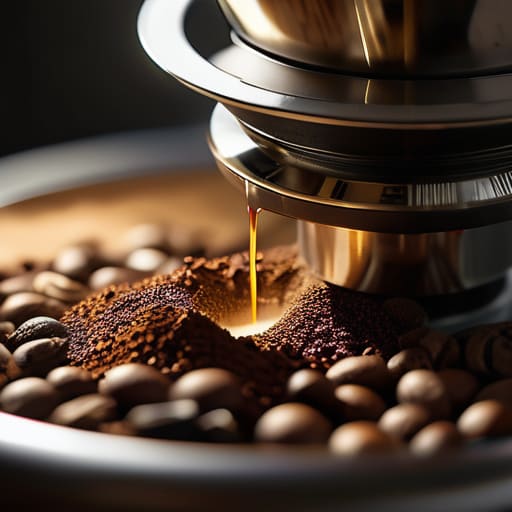
Look, mastering your memory isn’t about mindless repetition; it’s about the precision of your technique. Just like dialing in a shot of espresso, you can’t just dump water on grounds and hope for the best. You have to be intentional. We’ve covered how to move past the “passive reading” trap by using active recall to force your brain to work, and how to implement spaced repetition so you aren’t just cramming, but actually building long-term neural pathways. If you treat your study sessions like a messy, uncalibrated brew, you’re going to end up with nothing but bitter, unusable information. You need the right tools and the right timing to ensure that every bit of data you ingest actually sticks.
At the end of the day, learning is a craft, not a chore. There will be days when your focus feels as scattered as a poorly distributed puck, and you’ll feel like you’re getting nowhere. Don’t let that discourage you. Treat every mistake as a way to recalibrate your process. Whether you are mastering a new language or complex science, remember that consistency is the secret ingredient. Stop chasing perfection and start chasing the process. If you stay methodical, patient, and disciplined, you won’t just remember the facts—you’ll truly understand them. Now, go out there and start brewing some knowledge.