I still remember the first time I managed to brew a cup of coffee at home that rivaled those from my favorite cafe. It was a game-changer, and it’s a feeling I want to help you experience too. The truth is, how to brew coffee at home isn’t about following a set of vague guidelines or relying on expensive equipment. It’s about understanding the nuances of extraction and applying that knowledge with precision. For too long, people have been led to believe that brewing great coffee is an art reserved for professionals, but I’m here to tell you that with the right approach, you can achieve cafe-quality results in the comfort of your own home.
As a certified Q Grader and National Barista Champion, I’ve spent years perfecting my craft, and I’m excited to share my expertise with you. In this guide, I’ll cut through the noise and provide you with practical, actionable advice on how to brew coffee at home like a pro. We’ll dive into the specifics of grind size, water temperature, and brewing techniques, and I’ll explain the why behind every step. My goal is to empower you with the knowledge and confidence to experiment, adjust, and ultimately achieve the perfect cup of coffee that suits your taste. So, let’s get started on this journey to coffee perfection, and I promise you’ll never look at brewing coffee the same way again.
Table of Contents
Guide Overview: What You'll Need
Total Time: 10 – 15 minutes
Estimated Cost: $20 – $50
Difficulty Level: Easy
Tools Required
- Coffee Grinder (optional)
- Coffee Maker (drip, pour-over, or French press)
- Kettle (for boiling water)
- Measuring Cups (1 cup and 1/2 cup)
- Spoon (for stirring)
Supplies & Materials
- Coffee Beans (your preferred type and roast)
- Coffee Filters (if using a drip coffee maker)
- Sugar or Sweetener (optional)
- Cream or Milk (optional)
Step-by-Step Instructions
- 1. First, let’s start with the foundation of a great cup of coffee: high-quality beans. I always say that the best coffee is made from beans that have been freshly roasted, so try to get your hands on some beans that have been roasted within the last week or two. Take a moment to appreciate the aroma of the beans, and think about the flavor profile you’re aiming for – this will help you decide on the best brewing method.
- 2. Next, you’ll need to grind your beans to the perfect consistency. I’m a bit of a grind size obsessive, but trust me, it makes all the difference. You’re aiming for a grind that’s similar to kosher salt – not too fine, not too coarse. If you’re using a burr grinder, you can adjust the settings to get the perfect grind. If you’re using a blade grinder, try to grind the beans in short bursts to avoid generating too much heat.
- 3. Now it’s time to heat up your water to the ideal temperature. I like to use a thermometer to get the water to exactly 198°F – any hotter or colder, and you’ll be affecting the extraction of the coffee. While you’re waiting for the water to heat up, take a moment to prepare your brewing equipment. Whether you’re using a pour-over, French press, or espresso machine, make sure everything is clean and ready to go.
- 4. Once your water is at the right temperature, it’s time to start brewing. If you’re using a pour-over, place the filter in the dripper and rinse it with a little bit of hot water to get rid of any paper taste. Then, add your ground coffee to the filter – I like to use about 17 grams of coffee for a standard pour-over. Make sure the coffee is evenly distributed and the surface is smooth.
- 5. Now it’s time to pour the water over the coffee. I like to use a slow and steady pour, starting from the center of the coffee and moving outwards in a circular motion. This helps to evenly saturate all of the grounds and ensures a consistent extraction. As you’re pouring, take note of the coffee’s bloom – this is the initial release of CO2 from the coffee, and it’s a sign that the brewing process is underway.
- 6. Depending on the brewing method you’re using, you may need to wait a few minutes for the coffee to finish brewing. If you’re using a French press, you’ll need to stir the coffee and then press the plunger down to separate the grounds from the liquid. If you’re using an espresso machine, you’ll need to wait for the shot to finish pulling – this should take around 20-30 seconds. As you’re waiting, take a moment to appreciate the aroma of the coffee – this is a sign of the flavors to come.
- 7. Finally, it’s time to taste your coffee and make any necessary adjustments. I like to use a tasting journal to keep track of my brews and note any changes I need to make to the grind size, water temperature, or brewing time. Take a sip of the coffee and think about the flavor profile – is it balanced, or is it too bright or too dull? Make a note of any changes you need to make, and then get ready to brew another cup. Remember, the pursuit of the perfect cup is a journey, not a destination.
Brewing Coffee at Home
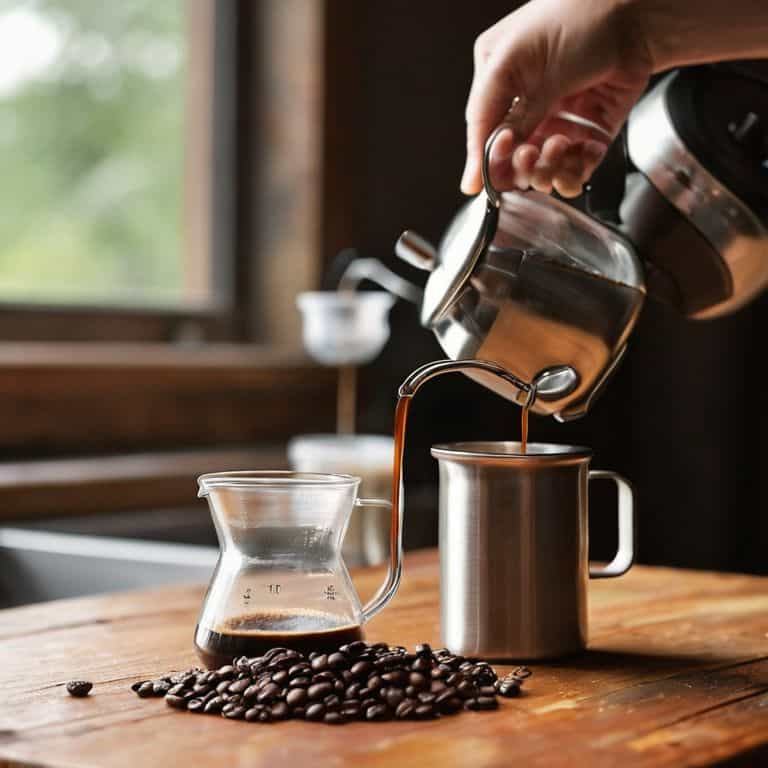
As I delve into the world of brewing coffee at home, I’m reminded of the importance of precise measurements. A perfect cup of coffee begins with the right balance of coffee to water, and this is especially crucial when using methods like french press coffee ratio. To achieve the ideal flavor, it’s essential to experiment and find the perfect harmony between the two.
When it comes to equipment, investing in a good grinder is key. Grinding coffee beans at home allows for the ultimate control over the flavor and aroma of your coffee. I recommend using a burr grinder, as it produces a more consistent grind and helps to prevent overheating, which can damage the beans.
In addition to the right equipment, coffee bean storage methods play a significant role in preserving the flavor and aroma of your coffee. To maintain the optimal flavor, store your coffee beans in an airtight container in a cool, dark place. This will help to prevent moisture and other environmental factors from affecting the taste of your coffee. By following these tips, you’ll be well on your way to brewing cafe-quality coffee in the comfort of your own home, and maybe even experimenting with cold brew coffee recipes.
French Press Ratio Mastery
To truly master the French Press, you need to dial in the perfect ratio of coffee to water. I’m talking about a ratio that’s precise to the gram. For me, the sweet spot is around 1:15 to 1:17, coffee to water. This means that for every 30 grams of coffee, you’ll want to use approximately 450-510 grams of water. Now, I know what you’re thinking – “Isn’t that a bit too precise?” And my answer is, absolutely not! The difference between a good cup and a great cup is often a matter of mere grams.
By experimenting with these ratios, you’ll start to develop a sense of how they impact the flavor and body of your coffee. Remember, the key is to find the balance that works for you and your taste preferences.
Pour Over Techniques Revealed
To elevate your pour-over game, it’s all about precision and patience. I’m talking about measuring your coffee to the gram and water to the milliliter. For a classic pour-over, you’ll want a 1:15 to 1:17 coffee-to-water ratio. Now, here’s where the magic happens: the pouring technique itself. You’ll want to pour in a circular motion, starting from the outer rim and moving inwards, to evenly saturate all the grounds.
This balanced approach ensures a smooth, full-bodied extraction. Trust me, the difference is palpable. By mastering this simple yet nuanced technique, you’ll be well on your way to brewing cafe-quality coffee in the comfort of your own home.
Elevate Your Home Brew: 5 Expert Tips
- Master Your Grind: Invest in a high-quality burr grinder to ensure a consistent grind size, which is crucial for optimal extraction
- Water You Waiting For: Experiment with different water temperatures and chemistries to find the perfect balance for your beans – I swear by a temperature of 93.5°C for my Gesha
- Ratio Rhapsody: Find your ideal coffee-to-water ratio, whether it’s 1:15 for a strong French press or 1:17 for a nuanced pour-over – precision is key
- Equipment Evangelism: Don’t underestimate the importance of a well-maintained brewer and scale – clean equipment and accurate measurements make all the difference
- Brew Mindfully: Treat each brew as an active meditation, focusing on the sights, sounds, and aromas – it’s not just about the end result, but the journey to get there
Key Takeaways for Brewing Cafe-Quality Coffee at Home
Mastering the art of coffee brewing at home requires precision and attention to detail, from grind size to water temperature, to achieve the perfect extraction
Understanding and experimenting with different brewing methods, such as French Press and Pour Over, can help you find your ideal cup and refine your technique
By embracing the science and nuance of coffee brewing, you can elevate your home-brewed coffee to cafe-quality standards and enjoy a more satisfying and delicious cup every time
The Pursuit of Perfection
Brewing coffee at home is not just about following a recipe, it’s about understanding the symphony of flavors, the dance of temperatures, and the harmony of ratios that come together to create a truly sublime cup.
Julian Vale
Mastering the Art of Home Brewing
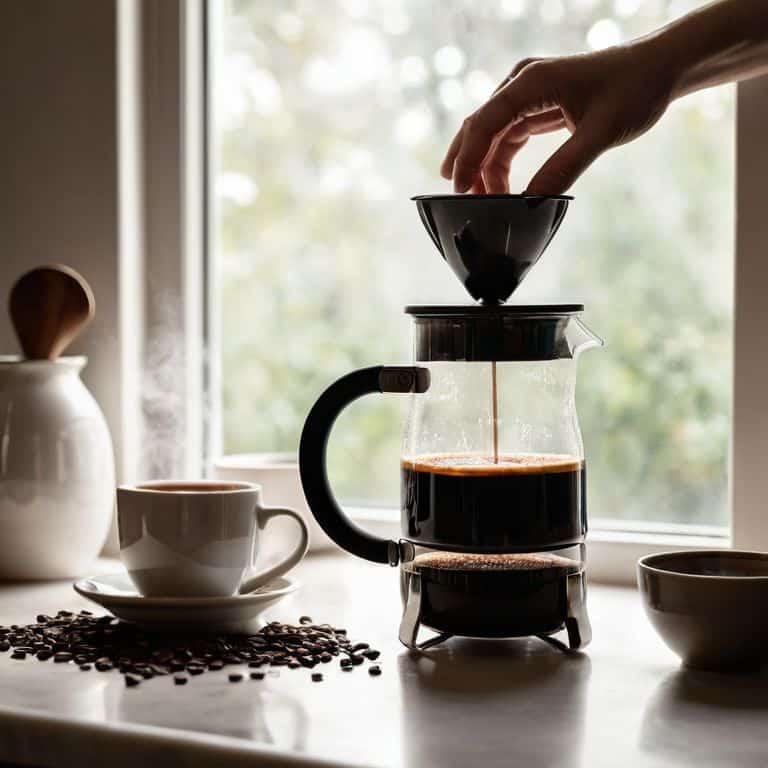
As we conclude our journey to brewing cafe-quality coffee at home, let’s recap the essential elements that will elevate your daily cup: mastering the French Press ratio, refining your Pour Over techniques, and understanding the nuances of water chemistry. By applying these principles and practicing with precision, you’ll be well on your way to creating a perfect extraction every time. Remember, the key to unlocking your full barista potential lies in attention to detail and a willingness to experiment until you find your ideal brew.
Now, as you embark on this delicious journey, I encourage you to view each brew as an opportunity to refine your craft, to chase the elusive ‘god shot’. With every pour, every grind, and every delicate balance of flavors, you’re not just making coffee – you’re creating a moment of pure joy. So, keep pushing the boundaries of what’s possible in your own kitchen, and never lose sight of the passion that drives us all to pursue the perfect cup.
Frequently Asked Questions
What is the ideal water temperature for brewing coffee at home?
For me, the ideal water temperature is between 195°F and 205°F – anything outside this range can lead to under or over-extraction. I’m meticulous about this, as it makes all the difference in bringing out the optimal flavors in your beans.
How do I determine the perfect coffee-to-water ratio for my favorite brewing method?
For me, the perfect ratio is all about balance. I recommend starting with a 1:15 to 1:17 coffee-to-water ratio and adjusting to taste. But here’s the thing: it’s not just about the numbers – it’s about understanding how your brewing method extracts the good stuff from those beautiful beans.
Can I use any type of coffee bean for brewing at home, or are there specific varieties that are better suited for certain methods?
Not all beans are created equal. For brewing at home, I recommend single-origin beans with distinct flavor profiles. For French press, a heavier-bodied bean like Sumatran works well, while pour-over demands brighter, more acidic beans like Ethiopian or Kenyan. Experiment with different varieties to find your perfect match.