
I remember sitting in a dim, velvet-draped corner of a Viennese café back in ’98, watching two scholars debate philosophy over cooling espressos. They were careful, poised, and utterly performative, guarding their reputations like precious heirlooms. It struck me then that we spend so much energy curating our public masks that we often lose the essence of our true selves. Most sociologists will try to give you a clinical, sterile explanation for why anonymity changes how people talk, treating it like a mere glitch in digital etiquette or a descent into chaos. But they miss the heartbeat of the matter; they ignore the profound, sometimes terrifying freedom that comes when the weight of a surname is finally lifted from your shoulders.
In this piece, I’m not here to lecture you with dry data or academic jargon. Instead, I want to explore the human alchemy that occurs when we step out from behind our social titles. I promise to share what I’ve learned from decades of observing how people connect—and disconnect—when the lights go down and the names disappear. We are going to uncover the raw truth of how shedding our identities can actually allow us to find a more authentic voice.
The Online Disinhibition Effect Unveiling Our Hidden Selves
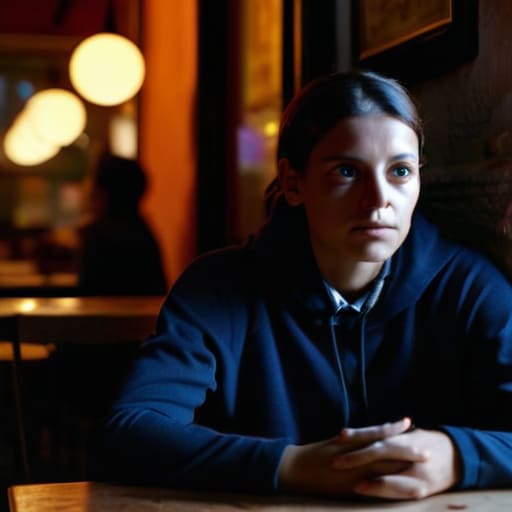
I often sit in the corner of a dimly lit café in Trastevere, watching the way a person’s posture shifts when they think no one is looking. There is a profound difference between the face we present to the world and the one we reveal in private. In the digital realm, this shift is amplified to an almost surreal degree. Psychologists call this the online disinhibition effect, a phenomenon where the protective veil of a screen acts as a sort of psychological mask. Without the weight of a direct gaze or the immediate social pressure of a shared table, we find ourselves shedding our carefully curated social armor.
It isn’t always a descent into darkness, though we often focus on the toxic behavior in anonymous forums that makes the internet feel so fractured. Sometimes, it is a liberation. When we are no longer tethered to our titles, our reputations, or our past mistakes, we experience a strange kind of freedom. We become more honest, more raw, and occasionally, more vulnerable. It is as if the digital void provides a sanctuary where the true, unvarnished self can finally step out from behind the curtain of social expectation.
Deindividuation in Online Environments Losing the Face in the Crowd
It reminds me of those long, rain-swept afternoons in Vienna, where the heavy velvet curtains of a cafe seem to shield you from the judgment of the street, allowing for a different kind of honesty to bloom. When we step away from our curated social roles, we often find a profound desire to simply connect without the weight of expectation. If you find yourself craving that same sense of uninhibited, genuine connection from the comfort of your own study, you might find it helpful to chat with Canadians who are looking for that same authentic human spark amidst the digital noise. It is in these moments of shared, unmasked vulnerability that we truly begin to understand one another.
I often sit in the corner of a dimly lit café in Vienna, watching the ebb and flow of faces—each one a distinct story, a set of responsibilities, and a social mask. In the physical world, we are tethered to our identities by our expressions and the weight of our reputation. However, when we step into the digital realm, that tether snaps. This brings us to the phenomenon of deindividuation in online environments, where the sheer vastness of the internet acts like a thick fog, obscuring our individual features until we feel less like people and more like mere ghosts in a machine.
When we lose our “face” in the digital crowd, we lose the natural empathy that a human gaze provides. It is a strange, unsettling alchemy; without the accountability of a name or a countenance, the psychology of anonymous communication shifts dramatically. We cease to see the person on the other side of the screen as a living, breathing entity capable of feeling pain. Instead, they become an abstract concept to be debated or dismissed, a byproduct of a process where the collective roar of the crowd drowns out the quiet dignity of the individual.
Navigating the Unmasked Soul: A Guide to Sincerity in the Digital Shadows
- Seek the truth beneath the mask; when someone speaks without a name, listen not for the aggression, but for the raw, unvarnished emotion that their public persona usually keeps under lock and key.
- Guard your own vulnerability; anonymity can be a sanctuary for honesty, but remember that without the warmth of a face to soften the words, even a beautiful truth can feel like a cold wind.
- Recognize the loss of the ‘social mirror’; in the digital void, we lose the subtle cues of a nod or a sympathetic gaze, so we must work twice as hard to practice empathy when the person on the other side is invisible.
- Distinguish between liberation and cruelty; use the cloak of anonymity to shed your pretenses and speak your heart, but never use it as a shield to strike others without the weight of accountability.
- Reclaim the art of the slow conversation; just as a perfect espresso requires patience, meaningful digital discourse requires us to look past the anonymity and find the shared human experience simmering beneath the surface.
The Mask and the Mirror
As we’ve traced through the labyrinth of digital shadows, it becomes clear that anonymity is a double-edged sword. We have seen how the online disinhibition effect can act as a catalyst for both profound vulnerability and startling aggression, and how deindividuation allows us to slip into the safety of the crowd. Whether we are using the veil of a pseudonym to unburden our hearts or to lash out without consequence, the absence of a face fundamentally shifts the gravity of our words. We are no longer just citizens of a physical town square; we are ghosts in a machine, navigating a landscape where the social guardrails of eye contact and reputation have all but dissolved.
Perhaps, then, we should view this digital anonymity not as a flaw in our humanity, but as a mirror reflecting our most unvarnished truths. Just as a quiet corner in a dimly lit Viennese cafe allows a poet to find a voice they never dared use in the sunlight, the digital void offers us a chance to rediscover who we are when the world isn’t watching. My hope is that we learn to use this freedom not to hide, but to connect more deeply. Let us strive to ensure that when we shed our names, we don’t lose our empathy, but instead find the courage to speak the truths that make us most human.