I still remember the day I first learned how to clean a french press properly. I was a young barista, and my mentor at the time, a coffee connoisseur, walked into the cafe and was appalled by the state of our French press. He told me that a dirty French press is not just a matter of aesthetics, but it can actually affect the flavor of the coffee. This experience taught me that cleaning a French press is not just about throwing some soap and water at it, but about understanding the nuances of coffee extraction.
In this article, I’ll share my expertise on how to clean a french press properly, so you can enjoy a flawless brew every time. I’ll cut through the noise and give you practical advice on how to maintain your French press, from the type of soap to use to the importance of descale regularly. By the end of this guide, you’ll be equipped with the knowledge to elevate your coffee game and join the ranks of coffee aficionados who can taste the difference between a well-maintained and a neglected French press.
Table of Contents
- Guide Overview: What You'll Need
- Step-by-Step Instructions
- Mastering French Press Cleaning
- Beyond Descaling Removing Old Coffee Residue
- Sanitizing Secrets the French Press Maintenance Schedule
- Elevating Your Brew: 5 Crucial Tips for a Spotless French Press
- Key Takeaways for the Perfect French Press Brew
- The Art of French Press Purification
- Elevating Your Brew: A Conclusion
- Frequently Asked Questions
Guide Overview: What You'll Need
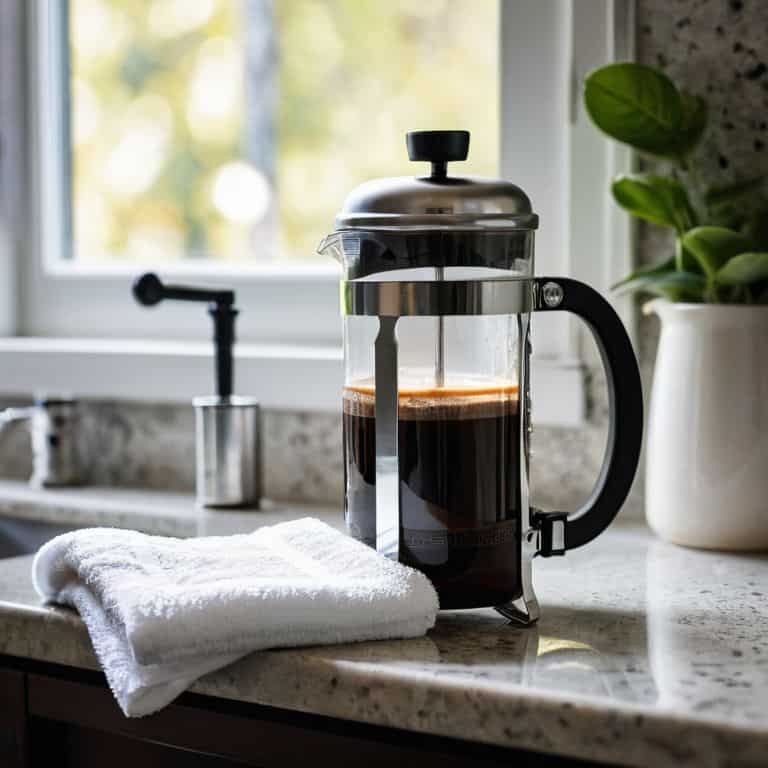
Total Time: 30 minutes to 1 hour
Estimated Cost: $0 – $5
Difficulty Level: Easy
Tools Required
- Soft sponge (or soft cloth)
- Mild dish soap (or fragrance-free soap)
- Warm water (in a sink or large container)
- Long-handled brush (for removing old coffee oils)
- Dish towel (for drying the French press)
Supplies & Materials
- Baking soda (optional, for removing stubborn stains)
- White vinegar (optional, for descaling and sanitizing)
Step-by-Step Instructions
- 1. First, disassemble your French press by removing the plunger and any other parts that can be taken out. This is crucial because old coffee oils and residue can hide in the tiny crevices, affecting the flavor of your next brew. Rinse these parts with warm water to loosen any debris.
- 2. Next, mix 1 tablespoon of mild soap with 1 quart of warm water in a bowl. Dip a soft sponge into this solution, wring it out thoroughly, and gently scrub the interior and exterior of the French press. Be careful not to use abrasive materials or harsh chemicals, as they can damage the glass or stainless steel and leave unwanted flavors behind. The goal is to clean, not to sanitize aggressively.
- 3. Use the soapy sponge to pay special attention to the areas around the spout and the handle, where old coffee and grime tend to accumulate. Gentle circular motions are your friend here, as they help dislodge stubborn stains without scratching the surface.
- 4. After scrubbing all parts, rinse the French press and its components with clean, warm water to remove any soap residue. This step is critical because any remaining soap can alter the taste of your coffee, making it soapy or bitter.
- 5. For a deeper clean, especially if you’ve noticed stubborn stains or old coffee oils affecting the taste, mix equal parts water and white vinegar in the French press. Let it steep for about 30 minutes to an hour. The acid in the vinegar will help break down and dissolve these unwanted residues.
- 6. Following the vinegar soak, discard the vinegar solution and rinse the French press thoroughly with warm water. Then, to remove any lingering vinegar taste, fill the French press with clean water, let it sit for a few minutes, and discard this water as well. This step ensures your French press is ready for its next use without any off-flavors.
- 7. Finally, dry the French press and its parts with a soft towel. This prevents water spots from forming and reduces the chance of any bacterial growth. For the plunger and other metal parts, you can also use a microfiber cloth for drying, as it leaves no lint behind.
- 8. To maintain your French press and prevent the need for deep cleaning too often, make it a habit to rinse it with warm water after each use and dry it thoroughly. This simple routine will extend the life of your French press and keep your coffee tasting its best.
Mastering French Press Cleaning
As I delve deeper into the world of French press maintenance, I want to stress the importance of creating a cleaning schedule. This might sound obsessive, but trust me, it’s crucial for preventing old coffee residue from building up and affecting the flavor of your brew. I like to think of it as a form of active meditation, where the ritual of cleaning becomes an integral part of the coffee-making process.
When it comes to removing old coffee residue, I swear by descaling a french press every few months. This ensures that any mineral deposits are removed, and your French press continues to perform optimally. It’s also essential to pay attention to the french press cleaning solutions you use, as some can leave behind residue or flavors that impact the taste of your coffee.
To take your French press maintenance to the next level, consider sanitizing a french press on a regular basis. This involves soaking the components in hot water and a mild detergent to remove any bacteria or old coffee oils. By doing so, you’ll be able to maintain the integrity of your French press and ensure that every brew is a reflection of your passion for coffee. Remember, cleaning french press glass components requires a gentle touch, so be sure to use a soft sponge and mild soap to avoid any scratches or damage.
Beyond Descaling Removing Old Coffee Residue
Beyond the ritual of descaling, there’s another crucial step to mastering French Press cleaning: banishing old coffee residue. This residual buildup can impart stale flavors to your brew, undermining all your hard work. To vanquish it, mix equal parts water and white vinegar in your French Press, then let it steep for about an hour. Afterward, discard the solution and rinse thoroughly with warm water. This will help break down and remove any lingering coffee oils and residue, restoring your French Press to its former glory.
By incorporating this step into your cleaning routine, you’ll ensure a cleaner, more neutral-tasting brew. It’s a small but vital detail that separates the casual coffee drinker from the devoted aficionado. Trust me, the difference is palpable.
Sanitizing Secrets the French Press Maintenance Schedule
To take your French press maintenance to the next level, I recommend establishing a sanitizing schedule. This ensures your brewer remains free of bacteria and old coffee oils. For daily use, a quick rinse with hot water after each brew is essential. Weekly, mix equal parts water and white vinegar, and let it sit for about an hour before rinsing thoroughly. This simple routine will keep your French press in top condition, allowing you to focus on the art of brewing. By incorporating this schedule, you’ll be one step closer to achieving the perfect cup.
Elevating Your Brew: 5 Crucial Tips for a Spotless French Press
- Use a soft sponge and mild soap to avoid scratching the French press’s surfaces, because a flawless brew starts with pristine equipment
- Regularly descale your French press to prevent mineral buildup, which can alter the taste of your coffee and lead to a less-than-optimal extraction
- Make it a habit to rinse your French press with hot water after each use to remove any leftover coffee oils, ensuring a clean slate for your next brew
- Sanitize your French press at least once a week by mixing equal parts water and white vinegar, then soaking all parts for about 10-15 minutes to eliminate any lingering bacteria
- Dry your French press thoroughly after cleaning to prevent water spots and bacterial growth, because a dry French press is a happy French press, and a happy French press is one that brews exceptional coffee
Key Takeaways for the Perfect French Press Brew
Always start with a thorough descale and cleaning of your French press to remove any built-up residue and mineral deposits that can alter the flavor of your coffee
Implement a regular maintenance schedule that includes sanitizing your French press after every use and deep cleaning it at least once a week to prevent old coffee oils from affecting the taste of your brew
Pay attention to the smallest details, such as water temperature, coffee-to-water ratio, and grind size, as these factors can significantly impact the quality of your French press coffee and help you achieve a flawless, cafe-quality cup at home
The Art of French Press Purification
Cleaning a French press is not just about removing yesterday’s coffee, it’s about resurrecting the nuances of the brew, and that’s where the real magic happens – in the pursuit of a flawless extraction, one meticulously cleaned press at a time.
Julian Vale
Elevating Your Brew: A Conclusion
As we’ve journeyed through the world of French press cleaning, it’s clear that mastering this art is about precision and dedication. From the initial steps of cleaning to the more nuanced practices of descaling and sanitizing, each element plays a crucial role in achieving a flawless brew. The process of removing old coffee residue and adhering to a maintenance schedule isn’t just about hygiene; it’s about respecting the craft of coffee making. By embracing these practices, you’re not only ensuring your French press remains in top condition, but you’re also enhancing the flavor and quality of your coffee.
As you conclude this journey, remember that the pursuit of the perfect cup is a continuous path of discovery. It’s about the joy of experimentation, the thrill of trying new roasts, and the satisfaction of sharing your creations with others. So, don’t just clean your French press – elevate your entire coffee experience. With every brew, you’re one step closer to coffee nirvana, and the journey, much like the coffee itself, is a rich and rewarding experience.
Frequently Asked Questions
What's the best way to remove stubborn coffee stains from the French press glass?
For those pesky stains, I swear by a mixture of equal parts water and white vinegar. Soak the glass for about an hour, then scrub gently with a soft sponge. If the stain persists, try a pinch of baking soda and a dash of elbow grease. Trust me, it’s worth the extra effort to restore your French press to its former glory.
How often should I clean my French press if I use it daily?
Daily French press use demands a cleaning routine that’s just as consistent. I recommend a quick rinse after each use and a deep clean every 3-4 days to prevent old coffee oils from building up. Trust me, your taste buds (and the coffee gods) will thank you for it.
Can I use vinegar to descale my French press, and if so, what's the ideal ratio of water to vinegar?
Vinegar to the rescue! Yes, you can use it to descale your French press. I recommend a 1:2 ratio of water to white vinegar. Mix, stir, and let it sit for about an hour to break down mineral deposits. Then, rinse thoroughly to avoid any lingering acidity. Trust me, your French press will thank you!